


The rapid advancement of microelectronics has significantly increased the demand for materials capable of delivering precision, thermal stability, and electrical reliability at microscopic scales. Among these advanced materials, 5um quartz fiber stands out as a highly specialized solution. With an ultra-fine diameter of approximately five micrometers, it provides an exceptional balance of mechanical strength, insulation performance, and high-temperature resistance. Its high-purity silica composition makes it especially suitable for sensitive electronic environments where contamination and instability must be minimized.
In modern semiconductor fabrication and electronic system design, 5um quartz fiber plays a critical role in ensuring consistent performance and long-term reliability. Its applications span multiple stages of microelectronic production and integration, supporting both structural and functional requirements.
Material Characteristics and Performance Advantages
The defining feature of 5um quartz fiber is its extremely fine diameter, which enables precise integration into micro-scale electronic systems. This small size supports tighter packing density, enhanced flexibility in design, and compatibility with increasingly complex device architectures. Despite its thin profile, the fiber maintains strong tensile strength, ensuring durability during handling and operation.
Thermal stability is another major advantage. Quartz fibers can withstand elevated temperatures without deformation or degradation, making them ideal for semiconductor fabrication processes where heat exposure is routine. Their low thermal expansion coefficient ensures dimensional consistency, which is essential for maintaining alignment and structural integrity in microelectronic components.
Additionally, 5um quartz fiber offers excellent dielectric properties. It functions as a reliable electrical insulator even under high-frequency and high-temperature conditions. This helps prevent signal interference and ensures stable device performance. The high purity of silica also minimizes contamination risks, which is critical in cleanroom manufacturing environments.
Applications in Semiconductor Manufacturing
One of the primary uses of 5um quartz fiber is in semiconductor manufacturing. These fibers are widely utilized in wafer handling systems, where their thermal resistance and non-contaminating characteristics help protect delicate silicon wafers during high-temperature processing. Their fine diameter allows seamless integration into precision equipment without interfering with micro-scale operations.
Quartz fiber is also used in insulation components within deposition and etching equipment. These processes require materials that can endure aggressive chemical environments while maintaining structural stability. The chemical inertness of quartz fiber ensures that it does not react with process gases or byproducts, preserving the integrity of the manufacturing environment.
Furthermore, 5um quartz fiber is incorporated into advanced filtration systems designed for ultra-clean processing conditions. Its structure enables efficient particle capture while maintaining airflow, contributing to improved yield and higher product quality in semiconductor fabrication.
Role in Electronic Packaging and Interconnects
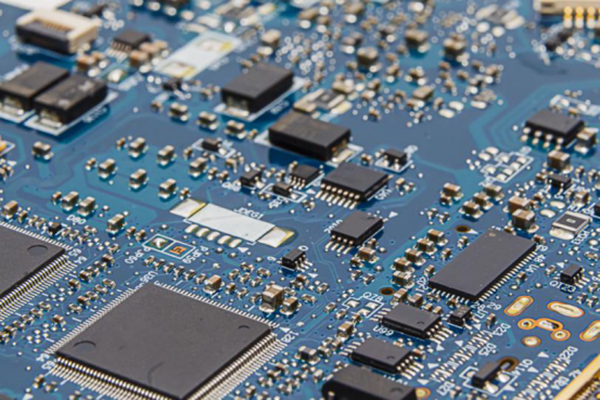
In electronic packaging, 5um quartz fiber serves as a reinforcement material that enhances mechanical stability without adding significant weight. It is commonly embedded in composite substrates to improve strength and thermal resistance. This is particularly important in high-density packaging environments, where components are tightly packed and exposed to thermal cycling.
Quartz fiber also plays a crucial role in advanced interconnect technologies. Its insulating properties make it ideal for separating conductive pathways and reducing the risk of short circuits. As electronic devices continue to shrink while increasing in complexity, the demand for reliable insulation materials becomes even more critical.
Its adaptability allows it to be manufactured into various forms, including woven fabrics and nonwoven mats, enabling tailored solutions for specific packaging requirements.
Use in High-Frequency and RF Applications
High-frequency operation is a defining characteristic of modern microelectronics, where maintaining signal integrity is essential. 5um quartz fiber contributes to improved performance in radio frequency and microwave applications by offering stable dielectric properties. Its low dielectric constant and minimal signal loss help preserve signal clarity and reduce interference.
These characteristics make quartz fiber highly suitable for use in circuit boards, antenna substrates, and electromagnetic shielding materials. In systems where electromagnetic compatibility is crucial, quartz fiber ensures consistent and reliable performance. Its ability to maintain stability under thermal stress further enhances its value in high-frequency applications that generate substantial heat.
Integration in Sensors and Precision Devices
Sensors and precision devices require materials that can maintain performance under varying environmental conditions. 5um quartz fiber is widely used in sensor assemblies where thermal and chemical resistance are essential. Its fine diameter enables precise placement without negatively impacting sensitivity.
In optical and photonic devices, quartz fiber serves as a support or insulating material that does not interfere with light transmission. Its transparency across specific wavelengths and resistance to thermal distortion make it ideal for high-precision optical applications.
Moreover, its resistance to environmental factors ensures long-term reliability, which is critical for sensors used in industrial monitoring and advanced instrumentation.
Advantages in Cleanroom and Contamination Control
Cleanroom environments require materials that do not introduce particles or impurities. 5um quartz fiber meets these strict requirements due to its high purity and stability. It does not outgas or degrade under typical processing conditions, making it ideal for contamination-sensitive applications.
Its use in filtration systems and protective barriers helps maintain strict cleanroom standards. By minimizing particle generation and ensuring chemical stability, quartz fiber contributes to improved manufacturing consistency and product quality.
Additionally, its ability to withstand repeated cleaning and sterilization processes ensures consistent performance over extended periods in controlled environments.
Future Trends in Microelectronics Applications
As microelectronics continue to evolve, the importance of advanced materials like 5um quartz fiber is expected to grow. Emerging technologies such as flexible electronics, miniaturized sensors, and high-performance computing systems demand materials that combine precision with durability.
Ongoing research is focused on improving fiber uniformity, enhancing surface treatment techniques, and optimizing integration methods. These advancements aim to increase compatibility with next-generation manufacturing processes and device architectures.
Hybrid material systems that combine quartz fiber with other advanced materials are also gaining attention. These systems offer opportunities to further enhance mechanical, thermal, and electrical properties, enabling innovative solutions in microelectronic design.
5um quartz fiber has become an essential material in the microelectronics industry, offering a unique combination of fine-scale precision, thermal stability, and electrical insulation. Its applications range from semiconductor manufacturing to high-frequency systems and precision sensors. As technology continues to advance, the demand for high-performance, reliable materials will only increase, positioning quartz fiber as a key contributor to the future of microelectronics innovation.
Apr-21-2026