


As communication technologies evolve toward ultra-high-speed data transmission, minimizing signal attenuation has become a central challenge in high-frequency systems. The emergence of 6G concepts is pushing operating frequencies into millimeter-wave and even terahertz ranges, where traditional materials often struggle to maintain signal integrity. In this context, quartz fiber yarn has gained significant attention as a high-performance material capable of supporting stable transmission with minimal loss.
6G quartz fiber yarn, engineered from high-purity silica and processed into fine, continuous filaments, offers a combination of dielectric stability, low loss characteristics, and thermal resilience. These properties make it particularly suitable for next-generation communication infrastructure, advanced electronics, and high-frequency circuit systems.
Understanding Signal Attenuation in High-Frequency Systems
Signal attenuation refers to the gradual loss of signal strength as it propagates through a medium. In high-frequency environments, attenuation becomes more pronounced due to increased dielectric losses, conductor losses, and electromagnetic interference. As frequency rises, even small inefficiencies in materials can significantly degrade signal quality.
In advanced communication systems, attenuation directly impacts bandwidth, latency, and overall system reliability. Therefore, selecting materials with low dielectric loss and stable electromagnetic properties is essential for maintaining high-performance transmission. Quartz fiber yarn addresses these requirements by providing a structurally and electrically optimized medium for high-frequency applications.
Material Structure and Its Role in Loss Reduction
The microstructure of quartz fiber yarn plays a critical role in minimizing signal attenuation. Composed of continuous, ultra-fine silica filaments, the yarn forms a uniform and highly controlled structure. This consistency reduces scattering and energy dissipation, which are common causes of signal loss in less refined materials.
The high purity of quartz ensures minimal presence of impurities that could introduce dielectric inconsistencies. This leads to a more stable electromagnetic response, particularly at high frequencies where even minor variations can result in significant losses. Additionally, the smooth surface and uniform diameter of the fibers contribute to predictable and efficient signal propagation.
Low Dielectric Constant and Loss Tangent
One of the most important factors influencing signal attenuation is the dielectric constant of the material. Quartz fiber yarn exhibits a relatively low dielectric constant, which reduces the storage of electrical energy within the material and allows signals to propagate more efficiently.
Equally important is the low dielectric loss tangent, which measures how much energy is dissipated as heat. Quartz fiber yarn’s low loss tangent ensures that minimal energy is lost during transmission, making it ideal for high-frequency applications such as antennas, transmission lines, and advanced circuit substrates.
These dielectric properties remain stable across a wide range of frequencies, ensuring consistent performance even as systems transition into higher frequency bands associated with 6G technologies.
Thermal Stability and Its Impact on Signal Integrity
High-frequency systems often generate significant heat during operation. Temperature fluctuations can alter material properties, leading to changes in dielectric behavior and increased signal attenuation. Quartz fiber yarn offers exceptional thermal stability, maintaining its properties even under elevated temperatures.
Its low thermal expansion coefficient ensures that physical dimensions remain stable, preventing misalignment or deformation in critical components. This stability is essential for maintaining consistent signal pathways and avoiding performance degradation over time.
By resisting thermal-induced variations, quartz fiber yarn helps ensure long-term reliability in high-frequency communication systems.
Applications in High-Frequency Communication Systems
6G quartz fiber yarn is increasingly being integrated into a variety of high-frequency applications. In antenna systems, it is used as a reinforcement and dielectric material that supports efficient signal radiation and reception. Its low loss characteristics contribute to improved antenna performance and reduced energy waste.
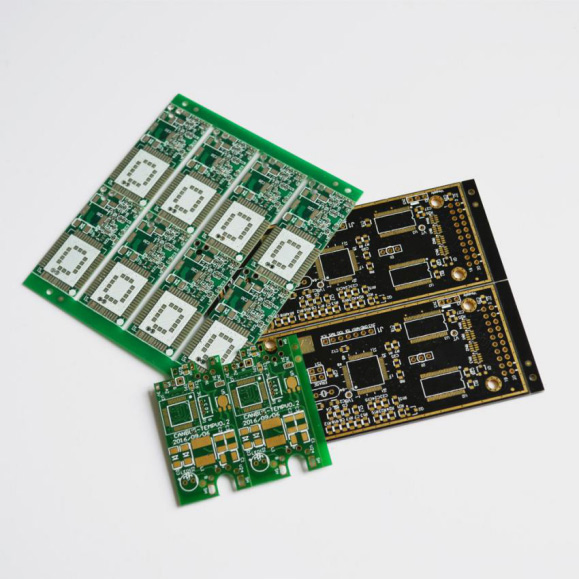
In printed circuit boards and substrates designed for high-frequency operation, quartz fiber yarn enhances insulation while minimizing dielectric losses. This enables more efficient signal routing and supports higher data transmission rates.
The material is also used in waveguides and transmission lines, where maintaining signal integrity over distance is critical. Its consistent structure and low attenuation properties make it a reliable choice for these demanding applications.
Advantages Over Conventional Materials
Compared to traditional materials used in high-frequency systems, quartz fiber yarn offers a distinct set of advantages. Its superior dielectric performance allows for reduced signal loss, which directly improves system efficiency and performance.
The material’s lightweight nature supports the development of compact and efficient designs, particularly important in modern communication devices. Additionally, its resistance to environmental factors such as temperature and chemical exposure ensures stable operation in a variety of conditions.
Quartz fiber yarn also supports scalability in manufacturing, making it suitable for both specialized applications and large-scale production in next-generation communication infrastructure.
Integration with Advanced Composite Systems
Quartz fiber yarn is often combined with advanced resins to form composite materials tailored for high-frequency performance. These composites can be engineered to achieve specific dielectric properties, mechanical strength, and thermal resistance.
By adjusting fiber orientation and density, manufacturers can optimize signal pathways and reduce interference. This level of customization enables the design of highly efficient components that meet the stringent requirements of 6G communication systems.
Such integration also enhances durability, ensuring that components maintain performance over extended operational lifetimes.
Future Outlook for 6G and Material Innovation
As research into 6G technologies progresses, the demand for materials that can support ultra-high-frequency operation will continue to grow. Quartz fiber yarn is well positioned to play a key role in this evolution due to its unique combination of electrical, thermal, and mechanical properties.
Future developments are likely to focus on further reducing dielectric losses, improving manufacturing precision, and enhancing compatibility with emerging device architectures. Innovations in hybrid materials and nano-scale engineering may also expand the capabilities of quartz fiber yarn, enabling even greater performance gains.
The continued advancement of material science will be essential in unlocking the full potential of 6G communication systems.
6G quartz fiber yarn represents a critical advancement in materials designed for high-frequency applications. Its ability to minimize signal attenuation through low dielectric constant, low loss tangent, and exceptional thermal stability makes it an ideal choice for next-generation communication technologies.
From antennas and circuit substrates to transmission lines and composite systems, quartz fiber yarn provides a reliable foundation for high-performance signal transmission. As the industry moves toward increasingly demanding frequency ranges, this material will continue to play a vital role in ensuring efficient, stable, and scalable communication solutions.
Apr-21-2026