


High frequency circuit boards used in millimeter wave radar, communication base stations, and high-speed computing modules require reinforcement materials with extremely stable electrical properties. Traditional electronic glass cloth often struggles to maintain consistent performance in multi-gigahertz frequency bands, while M9 quartz cloth addresses critical signal transmission challenges through its inherently low dielectric characteristics.
M9 quartz cloth is woven from fused silica filaments with a silica purity exceeding 99.95%. Its molecular structure contains virtually no polar impurity ions, enabling a stable dielectric constant (Dk) of 3.74 and a dissipation factor (Df) below 0.0002 across frequencies ranging from 10GHz to 100GHz. The low dielectric constant increases electromagnetic signal propagation speed, shortens electrical wavelength within substrates, and effectively reduces signal delay and crosstalk between densely routed circuit traces.
The ultra-low dissipation factor minimizes energy loss during signal transmission, reducing insertion loss in high-frequency circuits and ensuring greater signal integrity. As a result, communication systems can achieve faster data transfer rates and improved reliability.
Unlike conventional glass cloth materials whose dielectric performance may fluctuate with changes in humidity and temperature, M9 quartz cloth maintains highly stable electrical properties under thermal cycling and humid operating environments. This consistency allows PCB manufacturers to achieve precise impedance control within tight tolerances, which is essential for large-scale production of advanced high-frequency circuit boards.
Comprehensive Physical Performance of M9 Quartz Cloth
Beyond its exceptional dielectric characteristics, M9 quartz cloth offers balanced thermal, mechanical, and dimensional properties that support the entire manufacturing process of high-frequency copper clad laminates and printed circuit boards.
One of its most important advantages is its ultra-low coefficient of thermal expansion (CTE) of approximately 0.54 ppm/℃, significantly lower than that of traditional E-glass electronic fabrics. During high-temperature pressing, lamination, and solder reflow operations, this low CTE minimizes thermal stress within composite substrates.
By reducing internal stress, M9 quartz cloth helps prevent substrate warpage, conductor cracking, and solder joint displacement that can occur when different materials expand at different rates. This contributes to greater manufacturing consistency and improved long-term reliability.
The material also provides excellent thermal stability, with a continuous service temperature reaching 1050℃. It can withstand demanding resin impregnation processes and high-temperature packaging operations without structural deformation or deterioration of performance.
From a mechanical perspective, M9 quartz cloth exhibits high tensile modulus and uniform fabric density. Precision plain-weave construction ensures consistent thickness and eliminates loose yarn sections, enhancing compatibility with polyimide, modified epoxy, and other low-loss resin systems commonly used in high-frequency electronics.
Following high-temperature desizing treatment, the smooth fabric surface improves resin penetration and distribution throughout the composite structure. This enhances adhesion between the quartz cloth reinforcement and resin matrix while increasing the structural rigidity of the finished circuit board.
Additionally, the material features low moisture absorption. Reduced moisture uptake helps maintain stable dielectric performance over extended periods of operation and protects electronic systems from environmental influences.
Main Application Scenarios of M9 Low Dielectric Quartz Cloth
The combination of superior electrical and physical performance makes M9 quartz cloth an ideal reinforcement material for medium- and high-end high-frequency circuit boards across multiple advanced technology industries.
Telecommunication infrastructure represents one of the largest application sectors. M9 quartz cloth is widely used in copper clad laminates designed for 5G millimeter wave antennas, massive MIMO base stations, and emerging 6G research platforms. In frequency bands above 24GHz, the material helps maintain low signal attenuation and supports high-speed wireless communication.
Automotive intelligent driving systems also benefit significantly from M9 quartz cloth reinforced substrates. Millimeter wave radar modules installed in vehicles must operate reliably under wide temperature variations encountered throughout different climates and seasons.
The stable dielectric and thermal properties of M9 quartz cloth help ensure accurate target detection, distance measurement, and signal processing performance required by advanced driver assistance systems and autonomous driving technologies.
In aerospace and satellite communication applications, M9 quartz cloth serves as a reinforcement material for radar processing boards, satellite transceiver modules, and mission-critical communication systems. Its combination of lightweight construction, thermal stability, and low dielectric loss meets the stringent performance requirements of airborne and spaceborne electronic equipment.
The material is also increasingly utilized in high-speed optical communication modules, AI computing servers, and ultra-fast data center interconnection systems. In these applications, minimizing signal loss is essential for supporting high-bandwidth serial communication links and next-generation computing architectures.
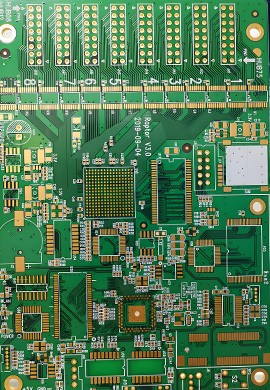
SHENJIU Professional Manufacturing Strength for M9 Quartz Cloth
SHENJIU has established a complete manufacturing chain covering high-purity quartz fiber production, precision weaving, thermal surface treatment, and comprehensive performance testing. This integrated production capability enables the company to supply both standardized M9 quartz cloth and customized solutions tailored to specific customer requirements.
For raw material control, SHENJIU utilizes carefully selected high-purity quartz feedstock and advanced melting and fiber drawing technologies to maintain silica purity levels above 99.95%.
Before fibers enter the weaving process, each production batch undergoes dielectric constant and dielectric loss evaluation to verify compliance with strict quality standards. This proactive approach helps ensure consistent electrical performance throughout the manufacturing process.
The company employs advanced weaving equipment specifically designed for electronic-grade quartz fabrics. Fabric thickness, yarn density, and surface flatness are controlled with high precision, supporting excellent batch-to-batch consistency and dielectric uniformity.
SHENJIU’s independent testing laboratory is equipped with specialized dielectric measurement systems, thermal expansion analyzers, and mechanical testing instruments. Every production roll undergoes comprehensive testing that includes dielectric constant, dissipation factor, thermal expansion coefficient, tensile strength, and moisture absorption evaluation.
Complete quality documentation accompanies each shipment, supporting customer material qualification, product development, and manufacturing validation activities.
The company’s engineering team has extensive experience integrating M9 quartz cloth with various low-loss resin systems. Technical specialists can recommend suitable material configurations based on circuit frequency requirements, substrate thickness, environmental conditions, and reliability objectives.
By optimizing fabric architecture and material compatibility, SHENJIU helps customers reduce weave-related signal effects and improve the overall signal integrity of finished copper clad laminates and circuit boards.
Through its standardized production system and strict quality management procedures, SHENJIU provides stable long-term supply capabilities for global CCL and PCB manufacturers.
Value of M9 Quartz Cloth in the High Frequency Circuit Board Industry Chain
As a critical reinforcement material, M9 quartz cloth plays an important role in advancing the performance capabilities of high-frequency circuit boards while supporting efficient and reliable manufacturing processes throughout the electronics supply chain.
The use of M9 quartz cloth allows material developers to reduce formulation adjustments during new substrate development, accelerating research and commercialization of advanced high-frequency copper clad laminates.
Its consistent batch-to-batch performance also helps reduce production variability and improve manufacturing yield. Stable dielectric characteristics minimize the risk of circuit board performance deviations during large-scale production.
For electronic equipment manufacturers, circuit boards reinforced with M9 quartz cloth offer enhanced signal transmission efficiency and improved energy utilization. These advantages support the development of compact, high-density electronic systems without compromising performance or reliability.
As global technologies continue advancing in areas such as high-frequency communication, intelligent transportation, aerospace electronics, and artificial intelligence computing, demand for low-dielectric and highly stable reinforcement materials continues to grow.
SHENJIU remains committed to continuously improving M9 quartz cloth weaving technology, surface treatment processes, and quality control systems. By supporting the evolving requirements of next-generation electronic substrates, the company provides standardized and customized low-dielectric quartz cloth solutions for the global high-frequency electronics industry.
Jun-25-2026