


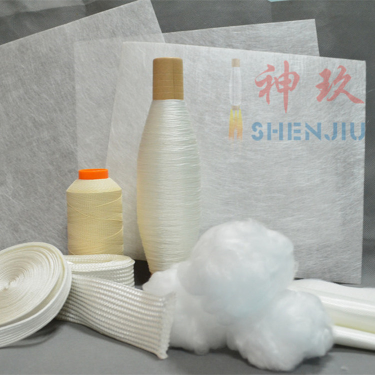
Untreated quartz wool refers to pure silica fiber cotton without binder, surface coating, or chemical modification. It is manufactured by melting high-purity quartz raw materials and drawing continuous fine fibers into fluffy cotton-shaped substances. Its primary component is silicon dioxide with a purity higher than 99.95%. The material presents a milky white loose fiber structure with a soft texture and strong plasticity, allowing it to be filled and shaped according to the internal space of different equipment.
This material has three core inherent physical and chemical properties. First, it features stable high-temperature resistance. Its long-term continuous service temperature can reach 1050°C, while its short-term instantaneous temperature resistance exceeds 1400°C. The ultra-low thermal expansion coefficient prevents structural shrinkage, hardening, or powder shedding during repeated heating and cooling cycles, maintaining the integrity of the fiber structure over extended periods.
Second, untreated quartz wool has extremely low thermal conductivity. Even under high-temperature environments, its thermal conductivity remains between 0.03 and 0.05 W/m·K. The gaps among fluffy fibers form stable air layers that effectively block heat conduction and thermal radiation, creating the foundation for excellent thermal insulation performance.
Third, it possesses outstanding chemical inertness. Apart from hydrofluoric acid, it shows minimal reaction with most inorganic acids, weak alkalis, organic solvents, and high-temperature corrosive gases. No impurities or volatile substances are released during heating, eliminating the risk of cross-contamination in sensitive experimental environments.
Unlike surface-treated quartz wool, untreated quartz wool completely avoids impurity interference introduced by coatings, binders, or adhesives. All performance advantages originate from pure quartz fibers, making it suitable for industrial high-temperature insulation and laboratory elemental analysis applications that require exceptional purity.
Application Value of Untreated Quartz Wool in Tube Furnace Insulation
Tube furnaces are widely used in thermal treatment, material sintering, catalyst activation, and high-temperature reaction experiments. Effective thermal insulation is essential for maintaining temperature uniformity and energy efficiency. Due to its unique material characteristics, untreated quartz wool has become a preferred insulation material in many tube furnace systems.
Within tube furnace structures, untreated quartz wool is commonly filled between heating element layers and furnace shells. It is also used to seal gaps around quartz tubes and furnace openings. Its soft and flexible fiber structure enables complete filling of irregular spaces without leaving thermal bridges.
Unlike many conventional insulation materials, untreated quartz wool remains stable after long-term exposure to elevated temperatures. It does not harden, crack, or lose its flexibility. This stability helps reduce heat loss from the furnace body and improves temperature consistency within the furnace chamber.
By minimizing external heat dissipation, untreated quartz wool contributes to lower energy consumption and more efficient furnace operation. This advantage is particularly valuable for medium and large tube furnaces that operate continuously over extended production cycles.
Another important benefit is its clean thermal behavior. Even under prolonged high-temperature conditions, untreated quartz wool does not release odors, smoke, or harmful gases. It also does not corrode metallic furnace components, helping extend the service life of heating elements, furnace shells, and insulation assemblies.
For high-purity applications such as semiconductor material calcination, advanced ceramic sintering, and electronic material processing, contamination control is critical. Untreated quartz wool provides a contamination-free insulation solution because it contains no coatings or additives that may detach and enter reaction zones.
Its lightweight nature further simplifies installation and maintenance. During furnace tube replacement or equipment servicing, the material can be easily removed, reshaped, and reinstalled. This flexibility makes it suitable for horizontal tube furnaces, vertical tube furnaces, and custom-designed thermal processing systems.
Core Advantages of Untreated Quartz Wool for Elemental Analysis
Elemental analysis instruments such as CHNS/O elemental analyzers, combustion analyzers, and gas chromatography systems require extremely pure supporting materials. Untreated quartz wool has become a standard filling medium in combustion tubes and reaction chambers due to its excellent purity and thermal stability.
During elemental analysis procedures, quartz wool is often placed at the bottom of combustion tubes to support samples, catalysts, and oxidation agents. Because the material consists almost entirely of high-purity silica, it does not introduce carbon, nitrogen, sulfur, or other detectable impurities during high-temperature combustion.
This characteristic helps maintain a stable analytical baseline and prevents inaccurate measurement results caused by contamination from supporting materials. Accurate baseline control is particularly important in trace-level elemental analysis where even minor contamination can affect test outcomes.
The porous fiber network also promotes efficient gas flow and heat transfer. As samples decompose and release gases, the fiber structure increases contact between gases and the heated environment, supporting complete combustion and improved reaction efficiency.
At the same time, untreated quartz wool acts as a filtration medium. It captures non-volatile particles and combustion residues, preventing these materials from entering downstream analytical components such as chromatographic columns, detectors, and gas pathways.
Protection of analytical equipment is especially valuable in laboratories performing continuous batch testing. By reducing particle contamination, quartz wool helps lower maintenance requirements and extend instrument lifespan.
Another major advantage is long-term chemical stability. Repeated heating and cooling cycles do not cause significant fiber degradation, impurity release, or structural breakdown. As a result, untreated quartz wool contributes to consistent analytical performance over extended operating periods.
Compared with alternative filling materials, it minimizes baseline drift and improves repeatability of measurement results. These qualities make it highly suitable for research laboratories, quality control facilities, and industrial testing centers that require reliable analytical accuracy.
SHENJIU Professional Manufacturing Strength of Untreated Quartz Wool
SHENJIU is a professional manufacturer specializing in advanced quartz fiber materials. The company has established automated production systems and comprehensive quality control procedures for manufacturing high-purity untreated quartz wool suitable for both industrial and laboratory applications.
In raw material selection, SHENJIU uses carefully chosen high-purity quartz sources. Multiple purification stages are conducted before melting to minimize metal impurities and ensure exceptional product purity. The SiO₂ content of finished untreated quartz wool can exceed 99.99%.
The production process excludes binders, coatings, and adhesives. By maintaining a pure fiber manufacturing route, SHENJIU ensures that the final product retains the intrinsic properties of quartz fibers without introducing contamination risks.
Each production batch undergoes detailed quality inspection. Product documentation includes impurity analysis, fiber diameter distribution data, and thermal stability information, providing complete traceability and quality assurance.
SHENJIU also possesses proprietary quartz fiber spinning technologies. Through precise process control, the company can adjust fiber diameter, bulk density, and fiber softness to meet different application requirements.
For laboratory elemental analysis, SHENJIU supplies highly uniform loose quartz wool optimized for purity and analytical accuracy. For industrial furnace insulation, higher-density filling grades are available to maximize thermal insulation performance and structural stability.
The resulting fiber structure remains uniform and resilient. Even after prolonged high-temperature operation, the material resists excessive compaction and continues delivering effective insulation and filtration performance.
To support diverse customer needs, SHENJIU offers flexible packaging options. Products are available in small laboratory containers for research applications as well as large industrial packaging formats for furnace manufacturing and maintenance projects.
The company’s technical team collaborates with universities, research institutions, and thermal equipment manufacturers. This extensive application experience enables SHENJIU to provide practical recommendations for material selection based on operating temperatures, purity requirements, and equipment configurations.
Through consistent quality control and application-focused product development, SHENJIU untreated quartz wool has gained recognition among material laboratories, thermal processing facilities, analytical testing centers, and industrial equipment manufacturers worldwide.
Selection Reference of Untreated Quartz Wool for Different Scenarios
Selecting the appropriate untreated quartz wool requires consideration of operating temperature, purity requirements, and application objectives.
For standard tube furnaces operating below 1000°C, conventional-density untreated quartz wool generally provides sufficient thermal insulation performance while maintaining ease of installation and cost efficiency.
For high-temperature systems operating above 1000°C for extended periods, high-purity low-shrinkage quartz wool is recommended. This helps maintain insulation integrity and minimizes the possibility of heat loss caused by slight dimensional changes during prolonged thermal exposure.
In elemental analysis applications requiring ultra-high accuracy, users should prioritize quartz wool manufactured through advanced purification processes with exceptionally low impurity content. This minimizes background interference and helps maintain analytical precision.
Proper filling density is also important. Excessive compression can reduce internal air spaces and decrease thermal insulation efficiency or gas flow performance. Conversely, overly loose filling may allow fiber movement or sample displacement during operation.
Professional manufacturers such as SHENJIU can provide technical guidance based on equipment specifications, operating conditions, and analytical requirements. By selecting the appropriate fiber diameter, bulk density, and purity level, users can maximize the performance and service life of untreated quartz wool.

Untreated quartz wool is a high-performance pure silica fiber material that plays an essential role in tube furnace insulation and laboratory elemental analysis. Its combination of high-temperature resistance, low thermal conductivity, chemical inertness, and contamination-free performance makes it a valuable solution for demanding industrial and scientific applications.
The absence of binders and surface treatments allows untreated quartz wool to deliver the full benefits of pure quartz fibers while avoiding impurity-related concerns. This makes it particularly suitable for high-temperature thermal processing and precision analytical testing.
Manufacturers such as SHENJIU ensure product consistency through rigorous raw material purification, automated production technology, and comprehensive quality control systems. These capabilities support the growing needs of industrial manufacturing, advanced research, and laboratory analysis.
As high-temperature processing technologies and precision analytical instruments continue to advance, untreated quartz wool will remain an important insulation and filling material. High-purity standardized production will continue to drive the future development and application of this specialized quartz fiber product.
Jun-25-2026