


As high-frequency technologies continue to advance, the demand for materials that can maintain signal integrity, thermal stability, and structural reliability has increased significantly. Applications such as advanced communication systems, high-speed electronics, and precision sensing devices require materials that perform consistently under challenging electromagnetic and thermal conditions. Quartz fiber yarn, produced from high-purity silica, has become a preferred choice for these applications due to its unique combination of electrical, thermal, and mechanical properties.
Engineers and material scientists increasingly rely on quartz fiber yarn to address the challenges associated with high-frequency environments. Its ability to minimize signal loss, maintain dielectric stability, and resist environmental stress makes it an essential component in modern high-performance systems.
Fundamental Properties of Quartz Fiber Yarn
Quartz fiber yarn is composed of continuous filaments derived from ultra-pure silica. This composition gives it a highly stable atomic structure, which contributes to its excellent performance in demanding environments. One of its most notable properties is its low dielectric constant, which reduces the storage of electromagnetic energy within the material and allows signals to propagate more efficiently.
Another important characteristic is its low dielectric loss tangent. This property ensures that minimal energy is dissipated as heat during signal transmission, which is critical for maintaining efficiency in high-frequency systems. In addition, quartz fiber yarn exhibits exceptional thermal resistance, allowing it to operate at elevated temperatures without significant degradation.
Its low coefficient of thermal expansion further enhances its performance by maintaining dimensional stability. This is particularly important in applications where precise alignment and structural consistency are required for optimal signal transmission.
Role in Minimizing Signal Loss
Signal loss is a major concern in high-frequency applications, as it can lead to reduced efficiency and degraded performance. Quartz fiber yarn helps address this challenge by providing a stable and low-loss dielectric medium. Its uniform structure minimizes scattering and reflection of electromagnetic waves, allowing signals to travel with minimal attenuation.
The high purity of the material also plays a critical role in reducing signal loss. Impurities can introduce localized variations in dielectric properties, leading to increased energy dissipation. By maintaining a consistent composition, quartz fiber yarn ensures predictable and reliable performance across a wide range of frequencies.
These characteristics make it particularly suitable for applications such as transmission lines, antennas, and high-frequency circuit substrates, where maintaining signal integrity is essential.
Thermal Stability and High Frequency Performance
High-frequency systems often generate significant heat during operation, which can affect material properties and overall performance. Quartz fiber yarn is highly resistant to thermal degradation, allowing it to maintain its electrical and mechanical properties even under elevated temperatures.
Its thermal stability ensures that dielectric properties remain consistent, preventing fluctuations that could lead to signal distortion or loss. This is especially important in applications such as radar systems, satellite communications, and high-speed data transmission, where reliability is critical.
The material’s ability to withstand thermal cycling without structural damage further enhances its suitability for long-term use in demanding environments.
Electrical Insulation and Dielectric Reliability
In addition to minimizing signal loss, quartz fiber yarn provides excellent electrical insulation. This is crucial in high-frequency systems, where unwanted electrical conduction can interfere with signal transmission. Its high dielectric strength ensures that it can withstand strong electric fields without breakdown.
Quartz fiber yarn also maintains stable dielectric properties across a broad frequency spectrum. This consistency allows engineers to design systems with predictable performance characteristics, reducing the risk of unexpected behavior during operation.
These qualities make it an ideal material for insulating components in high-frequency الأجهزة and ensuring reliable operation in complex electronic systems.
Integration in Advanced Composite Materials
Quartz fiber yarn is often used as a reinforcement material in composite systems designed for high-frequency applications. When combined with specialized resins, it forms composites that offer enhanced mechanical strength, thermal resistance, and electrical performance.
The flexibility of the yarn allows it to be woven into various fabric structures, enabling customization based on specific application requirements. This adaptability supports the development of lightweight, high-performance components that meet the demands of modern engineering.
By integrating quartz fiber yarn into composite materials, manufacturers can achieve a balance of strength, efficiency, and reliability that is difficult to obtain with traditional materials.
Applications in High Frequency Systems
Quartz fiber yarn is widely used in a range of high-frequency applications. In communication systems, it is utilized in antenna structures and transmission components to improve signal efficiency and reduce losses. Its low dielectric properties make it particularly effective in maintaining signal clarity at high frequencies.
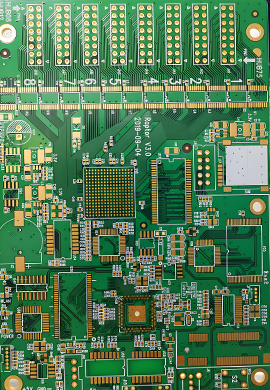
In electronics, it is used in printed circuit boards and insulating layers to support high-speed data transmission. Its thermal stability ensures consistent performance even in devices that generate significant heat during operation.
The material is also employed in aerospace and defense applications, where high-frequency communication and radar systems require materials that can perform reliably under extreme conditions.
Advantages Over Traditional Materials
Compared to conventional materials used in high-frequency applications, quartz fiber yarn offers several distinct advantages. Its superior dielectric properties reduce signal attenuation, improving overall system performance. Its lightweight nature supports efficient design, particularly in applications where weight reduction is important.
The material’s resistance to environmental factors such as temperature, moisture, and chemical exposure ensures long-term reliability. This reduces maintenance requirements and enhances the durability of components.
Quartz fiber yarn also provides greater design flexibility, allowing engineers to create customized solutions that meet specific performance requirements.
Future Trends and Innovations
As technology continues to evolve, the importance of high-performance materials like quartz fiber yarn is expected to grow. Advances in manufacturing techniques are improving fiber quality, consistency, and cost efficiency, making the material more accessible for a wider range of applications.
Research into hybrid materials is also expanding the capabilities of quartz fiber yarn. By combining it with other advanced materials, engineers can create composites with enhanced properties tailored to specific needs.
In addition, the development of next-generation communication technologies, including 6G, will further drive demand for materials that can support ultra-high-frequency operation with minimal signal loss.
Quartz fiber yarn has established itself as an ideal material for high-frequency applications due to its exceptional dielectric properties, thermal stability, and mechanical reliability. Its ability to minimize signal loss and maintain consistent performance under challenging conditions makes it a valuable component in modern engineering systems.
From communication infrastructure to advanced electronics and aerospace applications, quartz fiber yarn continues to support innovation and technological advancement. As high-frequency technologies progress, its role will become increasingly important in enabling efficient, reliable, and high-performance solutions.
Apr-21-2026